
Can a polished granite mortar and pestle Improve Grinding?
2026-11-14 21:24:26
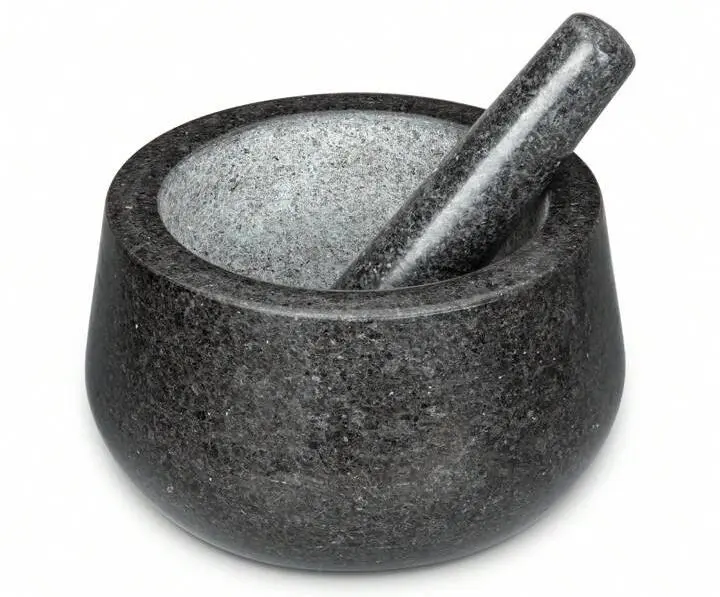
A polished granite mortar and pestle genuinely improves grinding performance. Granite ranks 6–7 on the Mohs hardness scale, giving it the density and structural integrity to process tough spices, dried herbs, and wet pastes with consistent force. The polished exterior creates a non-porous, hygienic surface that resists staining and odour absorption, while the intentionally unpolished interior retains the friction needed for effective shear grinding. At approximately 2.6–2.8 g/cm³, the tool's mass keeps it stationary during heavy-duty use, reducing operator effort and improving batch consistency across commercial and industrial kitchens.
Introduction
The people who work in procurement have to make clear, useful choices, like what stone grinding tool to buy. When food is made in professional kitchens, dining halls, or production lines, the grinding tool impacts the quality of the food, how clean it stays, and how long the tools last. For a long time, the granite spice grinder has been used to both make food and study drugs. But the move toward smooth finishes has made me think of a good question: does how the surface is treated change how well the tool works?
This guide gives you a straight answer to that question. While comparing different types of stone, it talks about the science behind granite grinding bowls. It also shows how to use them correctly and keep them in good shape, and makes it easy for B2B buyers to find suppliers. If you want to buy a lot of stone grinding tools or make your own brand, this article will give you the technical knowledge and buying advice you need to feel secure.
Understanding Polished Granite Mortar and Pestle
What Makes Granite a Superior Grinding Material?
Granite is a volcanic rock that was formed under a lot of pressure. This makes a core of crystals that is stronger than 150 MPa. When granite is ground under a lot of pressure over and over, it doesn't chip, bend, or break. This is because granite is very hard. Porous volcanic stone or calcium-based marble reacts chemically with acidic foods like vinegar or citrus juice. Granite, on the other hand, does not. Because of this, it is safe to use in everyday cooking with many different types of food.
The Role of the Polished Exterior
A granite herb grinder stays clean and lasts longer because its surface is smooth. Diamond shine with at least 3000 grit fills in the holes on the outside of the stone so that oils, dyes, and bacterial colonies can't get through. This is very important to make sure that food stays safe in commercial kitchens that follow FDA or LFGB rules. The smooth outside also keeps the structure finish of the tool from getting chipped when it is being moved and handled.
Why the Interior Stays Unpolished?
The inside of a granite cutting bowl is left rough on purpose. Because it is rough, this surface can hold and cut solid things. There would be no need for teeth on the inside of the pestle if it didn't have enough to break up the food. Polished granite mortar and pestle products follow this dual-surface design: the outside is smooth to keep it clean and look nice, and the inside is rough for grinding.
Performance Comparison: Polished Granite vs. Other Materials
Granite vs. Ceramic
Ceramic mortars are easy to find and don't weigh much, but they have a big flaw: the glazing on the top can break if it gets hit, and pots that aren't glazed quickly pick up smells and stains. A polished granite mortar and pestle, by contrast, will not stain or smell. You don't have to hold the bowl down by hand when you grind big things because it's heavy—about 3 kg for a standard 6-inch type.
Granite vs. Marble
Chemicals can change marble because it is made of calcium carbonate. Acidic things can scratch or pit the marble surface over time, which is bad for both cleanliness and the structure of the stone. This is not a weakness of granite. Different pH levels don't change the way granite works chemically. This means that a granite pestle and mortar will keep its surface quality for longer, even in high-frequency industrial settings where marinades, citrus pastes, and fermented foods are processed every day.
Granite vs. Wood
Wooden tools used for grinding food soak up water, keep bugs in their tiny cracks, and pass on flavours from one batch to the next. So, they can't be used in restaurants that follow HACCP rules. A polished granite grinding set gets rid of all of these risks. The stone can be washed clean after each use because its surface doesn't soak up water. Also, it won't wear down as wood does. For people who sell tools to food service companies, this difference is a big plus.
Optimising Grinding with Polished Granite Mortar and Pestle
Correct Grinding Technique
The best way to use a granite spice grinder is to use it in a circle and press down on it every once in a while. The bend inside the bowl applies shear force that breaks down the cell walls of herbs and spices better than a mechanical blade, letting their volatile oils escape. When grinding dry things like peppercorns or cumin seeds, lightly press on the outside to crack the shell before going on to the circle method. Slowly adding liquid to wet pastes like pesto or curry bases lets you change how thick they are.
Seasoning Before First Use
Before you use it for the first time, grind dry white rice into a fine powder that stays white. In this step, any stone dust left over from the making process is cleaned up, and the inside surface is made ready. BSTNMP recommends this seasoning step for all new polished granite mortar and pestle units before they enter service. If it's been a while since you last used the tool, you should also go through this step again.
Cleaning and Maintenance Standards
Here are the most important things you should do to keep a polished granite grinding set in excellent shape for business use:
- Rinse with warm water after each use to get rid of any dirt that's still on it. Soap shouldn't be used because the chemicals in soap can get into the stone over time and change the way later batches taste.
- Air dry completely before storage. Water that gets stuck under the mortar base can make the surface turn a different colour and let bugs grow.
- Avoid abrasive scrubbers on the smooth outside. There is only one thing you need to clean the inside of a house: a stiff wooden brush.
- Season periodically by grinding raw rice, garlic, and salt together every so often. This keeps the inside clean and stops different kinds of food from mixing.
- Handle with care during transport. It can break along the edge if it gets hit hard from the side, especially when a lot of it is being packed together.
These steps protect the smooth surface that sets professional-grade granite tools apart from cheaper ones and help the tool last longer.
Procurement and Sourcing Guide for B2B Clients
Key Specification Criteria
When evaluating a polished granite mortar and pestle supplier, procurement teams should verify five core specifications. To make sure the material is solid and not cracked inside, density tests or ultrasound checking should be used. Follow the rules set by the FDA and LFGB for heavy metal leaking. This will make sure that no lead or cadmium moves. To grind, the pestle head and mortar bowl should fully touch if they are the right size and shape. At least 3000 grit polish must be used on the outside. The base needs to be flat so that it doesn't move around while it's being used.
Supplier Vetting and Certification
Reliable granite kitchenware providers have written processes in place to make sure of the quality of their products from the time the raw stone is mined until it is packed. The BSTNMP company has been around since 2003 and now checks the quality of all of its stone products at every step of the way. EU and US guidelines are used to check materials against before they are used in production. Buyers from the US, Germany, France, Italy, the UK, the Netherlands, Australia, and Japan have worked with the company for a long time. This lets shippers and private-label brands show a history that can be checked.
Wholesale and OEM Considerations
When a business wants to buy a lot of polished granite mortar and pestle sets from a single seller, they should find out about the minimum order numbers, customisation options, shipping terms, and wait times before picking a seller. People who buy from BSTNMP can pick the right sizes, styles, and packages for their brand because it works with both OEM and ODM programmes. Thanks to low factory costs and direct connections with makers, big importers can save money on each unit without lowering the quality of the materials or the finish.
Conclusion
To get the job done right, the polished granite mortar and pestle is the best choice for business grinding. Damage to the structure, a risk to hygiene, and cross-contamination are the three most common places where grinding tools break. The hardness, chemical inertness, and lack of pores on the surface of this material all address these problems. People who buy stone grinding equipment for their businesses should choose granite over clay, marble, and wood in every important way. This is because granite is more durable and meets international food safety standards. There is no trade-off in looks for the two-surface design (finished outside, rough inside). It's just good engineering that makes the product last longer and work better.
FAQ
Can a granite mortar and pestle handle both dry and wet grinding?
Yes. The inside is rough enough to work well with both dry spices and wet pastes. By adding liquids slowly, you can keep control of the smoothness and structure of the wet grind.
How long does a commercial-grade granite grinding set typically last?
When used in a business setting, a high-density polished granite mortar and pestle can last for decades if you take good care of it. Cutting into granite doesn't damage it because it has a compressive strength of more than 150 MPa.
Does the polished surface affect grinding performance?
That smooth finish is only on the outside. It doesn't reduce the pressure inside. It stays rough on the inside after being ground, and the shine on the outside makes it easier to clean and less likely to get dirty.
Is granite safe for grinding acidic ingredients?
Yes. Because it is not chemically active like marble or limestone, acids can't react with granite. You can use lemon juice, vinegar, and citrus-based pastes to grind without damaging the stone surface.
How often should the mortar be re-seasoned in a professional kitchen?
Every two to three months is enough to re-season something that gets used a lot. If the tastes of different batches of food have mixed, use the dry rice method to season right away.
Source Quality Granite Tools Directly from BSTNMP
BSTNMP has been selling approved stone kitchenware to stores, importers, and private-label companies in North America, Europe, and other places since 2003. We can make any changes you want to the polished granite mortar and pestle. We test the materials carefully to make sure they meet FDA and LFGB standards, and for large orders, we offer low factory prices. You can email [email protected] to get samples, buyer's guides, or help with how to buy something. Our team is ready to help you with all of your buying needs, from making the specs to sending the things.
References
1. McGee, Harold. On Food and Cooking: The Science and Lore of the Kitchen. Scribner, 2004.
2. Journal of Food Engineering—"Effect of Grinding Method on the Release of Volatile Compounds in Spices. "Elsevier, 2018.
3. Food and Drug Administration (FDA). "Guidance for Industry: Food Contact Substances and Material Safety." FDA, 2020.
4. Journal of Archaeological Science — "Stone Tool Use in Ancient Culinary Practices: Granite and Basalt Grinding Stones." Elsevier, 2015.
5. European Food Safety Authority (EFSA). "Scientific Opinion on the Safety of Natural Stone Materials in Contact with Food." EFSA Journal, 2019.
6. Goldich, Samuel S. "A Study in Rock Weathering." Journal of Geology, University of Chicago Press, 1938.
You may like
Related Industry Knowledge