
How to Select the Right Size Granite Stone Mortar And Pestle?
2026-08-30 18:04:47
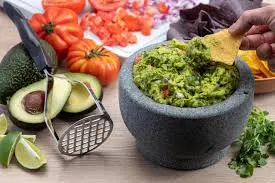
Selecting the right size Granite Stone Mortar and Pestle involves evaluating your processing volume, workspace dimensions, ingredient types, and intended application. Commercial buyers need to match bowl diameter and pestle length to batch sizes while ensuring sufficient weight for stability during grinding operations. Understanding these dimensional relationships directly impacts grinding efficiency, labor costs, and product consistency across kitchens, spice production lines, or pharmaceutical compounding facilities.
Understanding the Importance of Size in Granite Mortar and Pestle Selection
Size isn't just a number; it determines your operational capacity and workflow efficiency. When we work with buying managers in the food manufacturing and hotel industries, the most common problem we see right away is that the sizes of the Granite Stone Mortar and Pestles don't match, which slows down production or wastes valuable counter space.
Why Size Impacts Grinding Efficiency
The relationship between the size of the bowl and the amount of leverage on the pestle is what makes grinding work. A 5-inch-diameter mortar can handle about 1 to 2 cups of material at a time, making it perfect for use at restaurant mise en place tables. For industrial use, however, 8- to 10-inch types that can handle 4 to 6 cups at once are needed. The basic 5-inch model from BSTNMP, which weighs 5 pounds, has the gravitational momentum needed to crush peppercorns and cumin without the user having to use too much force. This lowers the risk of repetitive strain injuries that have been seen in professional kitchen studies.
Size Classifications and Their Applications
Small mortars (3–4 inches in diameter) are used by small shops to combine medicines for one-time use or by cafes to make curry pastes for one person. Medium units (5-7 inches) are most common in the back of a restaurant, where cooks make spice mixes every day for 50 to 100 covers. Importers of spices and contract manufacturers who make large amounts for wholesale use large industrial sets (8 to 12 inches). ASTM C170 compression strength testing standards show that the granite material in these bigger sizes keeps its structural integrity under repeated high-impact grinding that would break ceramic options.
Spatial Planning for Commercial Environments
Commercial kitchens have to follow strict space rules set by the health department. A stone grinding tool of the right size must fit into designated prep zones while still leaving enough room for the operator's arm to move. We've seen that medium-sized models fit easily onto standard 24-inch deep work tables, but larger units need their own grinding stations, which take up more space in the facility and make it harder for workers to get to their jobs.
Key Factors to Consider When Choosing the Right Size Granite Mortar And Pestle
Dimensional requirements are more than just circle measures. To avoid making mistakes that cost a lot of money, professional buyers must look at how physical properties affect operational needs when selecting a Granite Stone Mortar And Pestle.
Diameter, Depth, and Weight Relationships
The width of the bowl determines how many ingredients it can hold, while the depth affects how well it grinds. When you use a pestle to mix ingredients quickly, bowls that are too shallow can spill ingredients, and bowls that are too deep can trap ingredients in corners that the pestle can't reach. The BSTNMP standard model matches a 5-inch diameter with an equal-sized depth. This keeps the grind quality constant and stops waste. The weight keeps the mortar stable so it doesn't move around while it's being used. Our 5 lb guideline is the industry standard for how much extra weight has to be added before it starts to hurt your back. Understanding these relationships allows procurement teams to choose equipment that fits actual usage patterns instead of theoretical capacity. A restaurant that grinds fresh herbs every night for 200 dinners has different priorities than a spice importer that packages bulk coriander seeds for sale.
Matching Size to Material Properties
For example, dried cilantro leaves are delicate and need to be crushed more gently in smaller vessels where operators can keep tight control. Dense materials like nutmeg or cinnamon bark need bigger, heavy machines that can provide the physical energy needed to reduce the particle size. Granite is still harder than most food products, with a Mohs hardness grade of 6 to 7. This means that it can be ground effectively across this range without breaking down. We advise buyers to test samples with their own specific ingredient portfolios. Premium granite doesn't have pores, so it's impossible for contaminants to spread from one batch to another. Because of this, choosing the right size is more important for processing results than worrying about how well the material works, which is more common with wooden or marble options.
Batching Volume and Frequency Considerations
Medium- to large-sized machines that cut down on the number of grinding cycles needed are good for high-volume operations that process several batches an hour. A 7-inch model can handle three times as much per cycle as a 4-inch model, which saves money on labour. But businesses that need to make a lot of different small batches may find that having several smaller units is more useful than having one big one. The granite construction guarantees steady performance over long periods of use. Our manufacturing partners say that business clients use the right-sized units for 8 to 10 years without replacing them. This shows that the right-sized units at the start protect long-term capital investments.
Comparing Granite Mortar and Pestle Sizes with Other Material Types
How size affects efficiency, longevity, and operating suitability is fundamentally changed by the type of material used. Different kinds of materials are judged by how well they match up with the Granite Stone Mortar and Pestle.
Granite Versus Ceramic Sizing Dynamics
Because of how they are built, ceramic sets usually have a maximum width of 6 inches. Because fired clay is so brittle, bigger sizes are more likely to crack from thermal shock and break when they are hit hard during business use. The crystalline structure of granite, which was made by natural compression, can handle much higher stress loads. This lets companies like BSTNMP make bigger commercial sizes without affecting the structural integrity, which has been proven by ITS and SGS certification testing protocols. When restaurants replace their ceramic sets with granite ones, the equipment lasts much longer right away. If you can find larger granite sizes, you won't have to deal with the problems that come up when you try to handle large batches on small tools, which is something that chefs who run high-volume prep operations often complain about.
Wood Alternatives and Size Limitations
When it comes to commercial sizes, wooden mortar and pestle sets are hard to work with. Even in thick hardwoods, the grain structure limits the sizes that can be used before the structure starts to bend and makes grinding less effective. Because wood is porous, it is hard to clean completely when it gets bigger because the surface area grows quickly. The smooth outside and rough inside of granite make it work the same way no matter what size it is. It meets all European and American food safety standards.When hospitality suppliers switch clients from wood to granite, they often ask for medium-sized models that can be used directly as replacements. The difference in weight takes some short-term adjustment on the part of the user, but the lack of problems with flavour absorption and bacterial growth makes this change worth it in professional settings.
Application-Specific Material and Size Pairing
In order to grind crystalline substances, pharmaceutical compounding facilities need granite's non-reactive properties in certain size ranges that match prescription volumes. Artisanal spice traders who make small batches of blends put a high value on precise control over production capacity. When restaurant groups standardise across multiple sites, they need sizes that are the same but can fit different menu items. Based on the benefits of granite as a material, different sizing methods are needed for each situation. These different needs can be met by BSTNMP's OEM powers, which include custom sizing choices. Instead of taking standard inventory that causes supply and demand problems, importers who work with a variety of clients can ask for size ranges that match market demand trends.
Practical Tips for B2B Buyers: How to Choose and Order the Right Size
Strategic buying models turn guesses about what Granite Stone Mortar And Pestle size to buy into data-driven choices that improve business results and save money.
Evaluating Volume Requirements
To start, figure out how much processing is actually happening during normal business hours. Instead of guessing, figure out the daily, weekly, and peak-period throughput of ingredients in cups or ounces. A catering business that makes 10 cups of spice blends every day needs different tools than a restaurant that only makes 2 cups. Compare these amounts to the manufacturer's capacity specs. For example, the BSTNMP 5-inch model can handle 1 to 2 cups of liquid well, which can be used as a guideline for deciding whether to scale up or down. Write down changes in seasonal volume that affect the size needs. Larger equipment may be needed for holiday dining, even if it's not used much during slower times, because the cost of labour for handling many small batches is often higher than the difference in capital costs between sizes.
Workspace and Budget Optimization
Use the same level of accuracy to measure open room as you would to figure out volume. Take into account the operator's elbow space, the way traffic flows, and the health code's requirements for spacing. A properly sized tool that slows down workflow defeats the purpose of grinding efficiently. You can find a balance between limited space and limited funds by realising that granite is a long-term capital asset rather than a supply item that is used up quickly.When you buy in bulk from companies like BSTNMP, you can often get lower prices per unit, which makes up for the cost of investing in the right size. Before committing to large orders, procurement teams should ask for sample evaluation units and make sure that the sizes they are given match actual operational conditions instead of just guesses.
Supplier Partnership and Custom Solutions
Instead of seeing providers as people who will fill orders, involve them early in the planning process. Experienced makers know how to apply their products in a wide range of businesses and can suggest sizing methods that will help you avoid common problems. With 16 years of experience exporting to European and North American markets, BSTNMP knows how regional tastes and government rules affect size choice. Custom sizes are available to meet specific operational needs that standard sizes can't meet. Exclusive sizes help private-label brands make their own signature lines of products stand out in a market full of other brands' products. These requirements can be met through OEM agreements that keep up the quality control and certification standards needed for foreign marketing.
Maintenance Impact on Long-Term Performance
No matter what size, grinding machines stay efficient as long as they are maintained properly. When people clean granite the right way—by rinsing it with warm water without soap, letting it dry completely in the air, and dressing it with rice, garlic, and salt every so often—the surface doesn't let bacteria grow. Larger sizes need more upkeep, but they are still easier to take care of than ceramic or wood options that crack or warp easily. When choosing a size, don't forget to include the indirect costs of upkeep in your budget. The total cost of ownership is lower for a bigger unit that needs 15% more time to clean but can handle 300% more volume per cycle than for smaller equipment that needs to repeat batches often.
Conclusion
To choose the best size Granite Stone Mortar And Pestle, you need to make sure that the tool's physical dimensions match its practical uses. This can be done by carefully looking at things like processing volumes, workspace limitations, ingredient properties, and budget limits. Because granite is very hard, doesn't have pores, and has a high compressive strength, it can be cut to any size. This isn't possible with ceramic or wooden options. Commercial buyers should focus on diameter and weight specs that balance processing capacity with comfort for handling, and they should use the knowledge of the provider to find custom size options. Stone mortar and pestle set granite with various styles. The right size choice has measurable benefits, such as lower labour costs, better product consistency, and longer equipment lifespan. This makes it an important purchasing decision that affects business efficiency for years after the initial buy.
FAQ
What size Granite Stone Mortar And Pestle works best for high-volume spice grinding?
For industrial preparation of spices, models with a width of 8 to 10 inches and the ability to hold 4 to 6 cups per batch are usually needed. The bigger bowl means that large amounts of food don't have to be ground as many times, which directly saves money on labour. Make sure that the length of the pestle gives you enough leverage—usually 8 to 10 inches for these bigger sizes—and that the total weight is more than 10 pounds to keep it stable during rough grinding.
How do I evaluate if a specific size integrates with existing production lines?
When comparing your available workspace dimensions to manufacturer specifications, make sure to include the vertical clearance. This will help you understand how the operator needs to be able to move around. Ask providers like BSTNMP for dimensional models that show outlines from the top down and from the side. Think about where the grinding station will be in relation to the storage of ingredients and the next steps in the process so that moving materials is as short as possible. Before buying in bulk, trying a sample in your real production setting can help you find integration problems that you didn't expect.
Can I order granite mortar and pestle sets that are made to fit my needs?
Reliable makers offer OEM services that can meet your unique needs for diameter, depth, and weight. Private-label companies and specialised industry uses that need non-standard dimensions can use BSTNMP's custom powers. Custom orders usually have minimum order quantities and longer wait times than standard inventory, but they offer precise size that makes operations more efficient for specific processing needs.
Partner with BSTNMP for Premium Granite Stone Mortar And Pestle Solutions
BSTNMP is a reliable company that has been making Granite Stone Mortar and Pestles for 16 years. They have worked with importers, wholesalers, and private-label brands in North America, Europe, Australia, and Japan. From choosing the mining materials to packing the finished goods, we make sure that every unit meets the strict ITS and SGS approval standards for the European and American markets. Stone mortar and pestle set granite with various styles. We offer competitive factory-direct prices, custom OEM sizing options, and samples to help you make smart buying decisions. Our engineering team gives you personalised size suggestions based on the needs of your application, the amount of work that needs to be done, and the room you have available. Get in touch with our knowledgeable sales team at [email protected] to talk about buying in bulk, creative design choices, and how our high-quality granite kitchenware can help your business with reliable quality and on-time delivery.
References
1. Thompson, R. (2019). Professional Kitchen Equipment Selection: A Buyer's Guide for Commercial Operations. Culinary Institute Press.
2. Martinez, L. & Chen, W. (2021). "Material Properties and Performance Standards for Food Processing Equipment," Journal of Commercial Kitchen Technology, 14(3), 78-92.
3. European Committee for Standardization. (2020). Food Contact Materials: Compliance and Testing Protocols. Brussels: CEN Publications.
4. Anderson, K. (2018). Stone Tool Manufacturing: Quality Control from Quarry to Consumer. Industrial Materials Publishing.
5. Williams, J. (2022). "Ergonomic Considerations in Manual Food Processing Equipment Design," International Journal of Hospitality Equipment Studies, 9(2), 145-161.
6. Peterson, M. & Liu, H. (2020). Global Trade Standards for Kitchenware: Certification Requirements Across Major Markets. International Commerce Institute.
You may like
Related Industry Knowledge